Case Study 7

Automated Tensile Testing

A manufacturer needed to automate the repetitive handling and loading process surrounding tensile strength testing. The application required the system to accommodate multiple workpiece geometries while maintaining consistent loading, testing, and unloading.

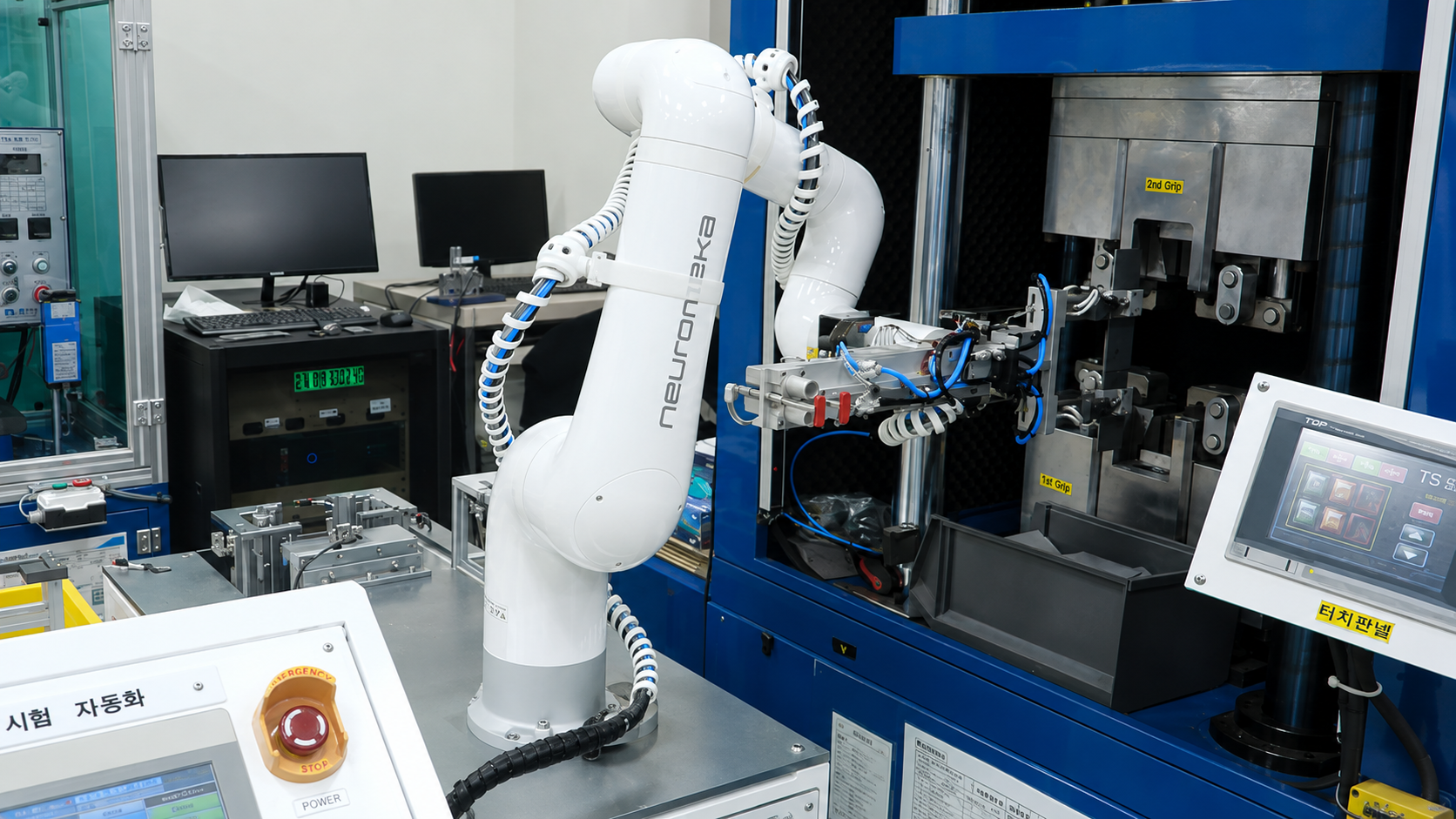
Indy collaborative robot loading a workpiece into a tensile testing machine
The Indy7 collaborative robot uses a custom gripper to load a workpiece into the tensile testing machine.

Background

Tensile testing is used to verify the strength and mechanical properties of manufactured components. In a high-volume testing environment, repeatedly loading workpieces into the testing machine and removing them after testing can require significant manual handling.

The customer needed an automated system capable of handling two different workpiece types:

  • Straight workpieces
  • Cross-shaped workpieces

Because the parts vary in geometry and length, the system required dedicated material presentation and alignment before each workpiece could be inserted into the tensile testing machine.

Customer Challenges

  1. High-Volume Repetitive Handling. The testing process requires continuous loading and unloading of individual workpieces. Manual handling can create a repetitive workload and limit the number of tests that can be performed with consistent timing.
  2. Multiple Workpiece Geometries. The system needed to handle both straight and cross-shaped workpieces. Each part type required different storage and alignment methods before loading.
  3. Precise Vertical Insertion. Workpieces needed to be correctly aligned before insertion into the tensile testing machine. Differences in part length and geometry had to be accommodated to ensure reliable engagement with the test fixture.

Deployed Robot Solution

Neuromeka integrated an Indy collaborative robot with custom end-of-arm tooling, part lifts, alignment mechanisms, and a finished-part discharge area.

The system automatically presents individual workpieces to the robot, adjusts their orientation for loading, inserts them into the tensile testing machine, and removes them after testing.

The system includes the following key components:

  1. Indy Collaborative Robot. Performs the automated handling and transfer sequence.
  2. Custom Gripper. Designed for the vertical insertion and extraction of workpieces from the tensile testing machine.
  3. Vacuum Gripper. Picks up one workpiece at a time from the designated loading position.
  4. Workpiece Alignment System. Aligns cross-shaped workpieces and accommodates differences in workpiece length.
  5. Straight Workpiece Adjustment Section. Positions straight workpieces to support vertical insertion and removal.
  6. High-Capacity Part Lifts. Dedicated lifts accommodate up to 150 straight or cross-shaped workpieces, presenting each part at the robot pickup position.
  7. Finished-Part Discharge Area. Receives workpieces after tensile testing is complete.

How the System Works

  1. Automated Part Presentation. Straight and cross-shaped workpieces are loaded into their respective lifts. The selected lift presents individual workpieces at a designated pickup position.
  2. Individual Part Pickup. The Indy robot uses a vacuum gripper to pick up one workpiece at a time.
  3. Workpiece Alignment. The system adjusts the position and orientation of the workpiece based on its geometry. This ensures the part is properly positioned for vertical insertion into the tensile testing machine.
  4. Transfer and Loading. The robot uses the dedicated gripper to transfer the workpiece to the tensile testing machine and load it into the testing fixture.
  5. Tensile Testing. The testing machine performs the tensile strength test while the robot prepares for the next handling sequence.
  6. Finished-Part Removal. After testing is complete, the robot removes the workpiece and transfers it to the finished-part discharge area.
Indy collaborative robot automating tensile test workpiece handling

Flexible Workpiece Handling

The system can be configured to test different workpiece types within the same automated cell.

For cross-shaped workpieces, the alignment system is adjusted to match the part's specifications before the automated sequence begins. The robot can then transfer the aligned workpiece to the tensile testing machine.

This flexible approach allows the system to support different product geometries without requiring a separate testing cell for each part type.
Results

MetricBefore AutomationAfter Automation
Part HandlingManual loading and unloading of each workpieceIndy robot automates pickup, alignment, loading, and unloading
Workpiece TypesSeparate manual handling for straight and cross-shaped partsDedicated lifts and alignment systems handle both part types automatically
Alignment & InsertionManual alignment required before insertion into the test fixtureAutomated alignment ensures reliable engagement with the test fixture
Testing CapacityLimited by continuous manual attentionHigh-capacity lifts support up to 150 parts per automated run

Automation Benefits

  1. Reduced Repetitive Manual Work. The robot handles the repetitive loading and unloading process, allowing operators to focus on other production and quality-control tasks.
  2. Increased Testing Consistency. Automated part presentation and handling provide a standardized process for loading workpieces into the tensile testing machine.
  3. High-Capacity Operation. The dedicated workpiece lifts can accommodate up to 150 parts, enabling extended automated testing runs.
  4. Flexible Part Handling. The system supports both straight and cross-shaped workpieces through dedicated lifts and alignment mechanisms.
  5. Modular Automation Design. Custom grippers, alignment systems, and material presentation equipment can be adapted to the customer's workpiece geometry and testing requirements.

Contact Us

Share your process requirements, constraints, payload, cycle time, and floor layout. Our team will help you evaluate the right automation solution for your application.

Book a Meeting