Automated Pre-Supply of Reverse Light Lenses for Automotive Taillight Production
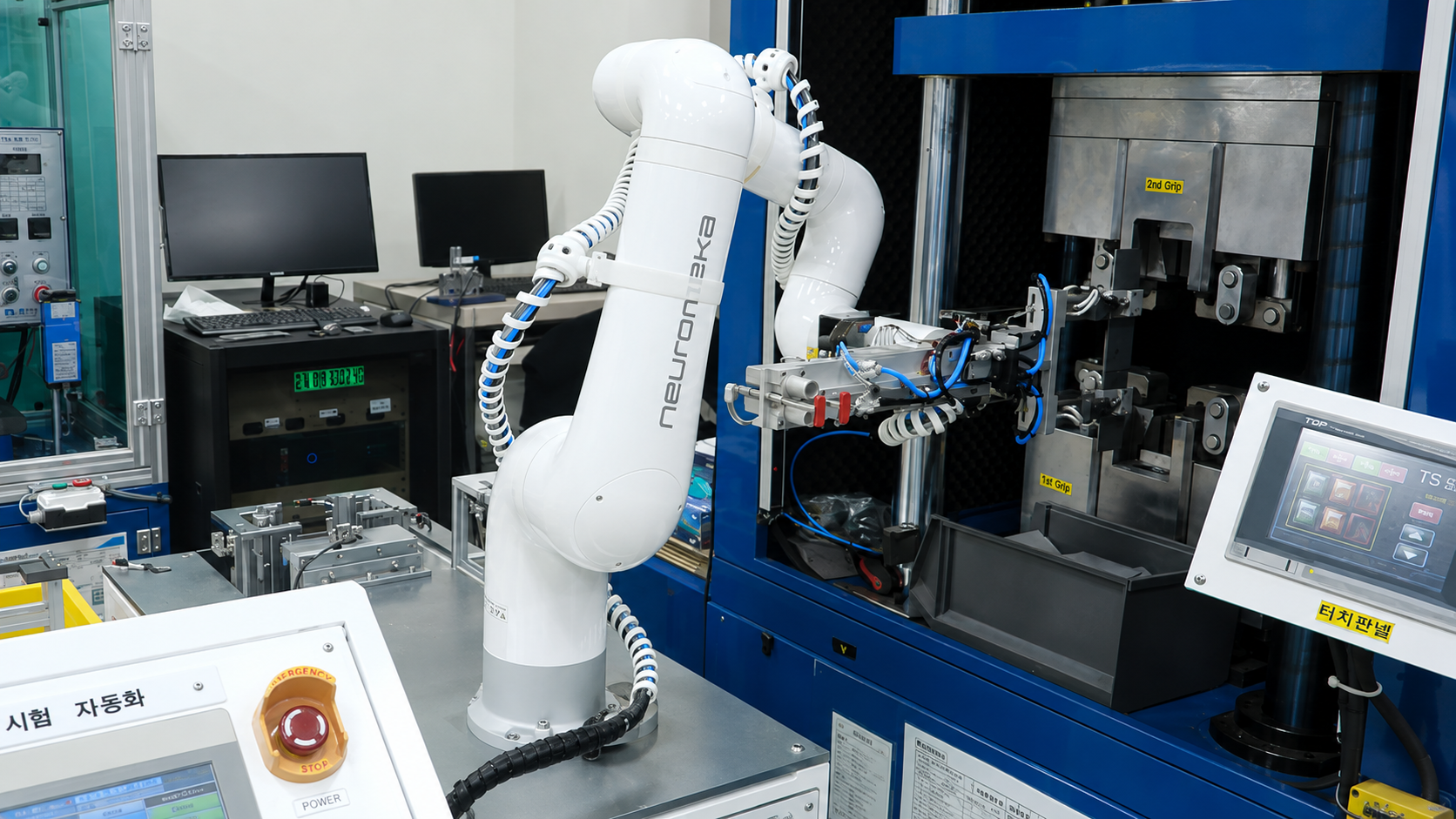
The fully enclosed robotic cell automates lens preparation and handoff in a clean and safe environment for multi-stage injection molding.
Background
In automotive taillight manufacturing, certain components are produced through a two-stage injection molding process.
In this application, the reverse light lens is first injection molded and then transferred to a second injection molding process, where it is combined with additional material to form the final taillight component.
Before the second-stage molding process, each lens must undergo two preparation steps:
Electrostatic discharge (ESD) treatment. to remove static charge and reduce dust attraction.
Preheating. to bring the lens to the appropriate temperature for the second injection molding process.
The customer was manually handling these preparation and supply steps, creating labor, consistency, and safety challenges.
The Indy7 performs precise lens handling inside a safety-enclosed cell, supporting clean and consistent part transfer for automotive taillight assembly.
Customer Challenges
High Manual Labor Requirements. Operators were required to manually pick and position lenses, perform ESD air blowing, transfer parts to the preheating station, and prepare them for the second-stage injection process. The process required dedicated labor across two shifts per day.
Inconsistent Process Conditions. Manual handling resulted in variations in ESD treatment, positioning, and preheating time. Inconsistent preheating could lead to issues such as warpage, poor bonding, and visible defects during the second-stage molding process.
Ergonomic and Safety Risks. Operators repeatedly handled parts near hot equipment and preheating stations. The repetitive movements also created ergonomic concerns, while frequent manual handling made it more difficult to maintain consistent cleanroom conditions.
Production Interruptions. The process depended on operator availability. Shift changes, breaks, or absences could interrupt the supply of prepared lenses and cause the second-stage injection machine to wait for parts.
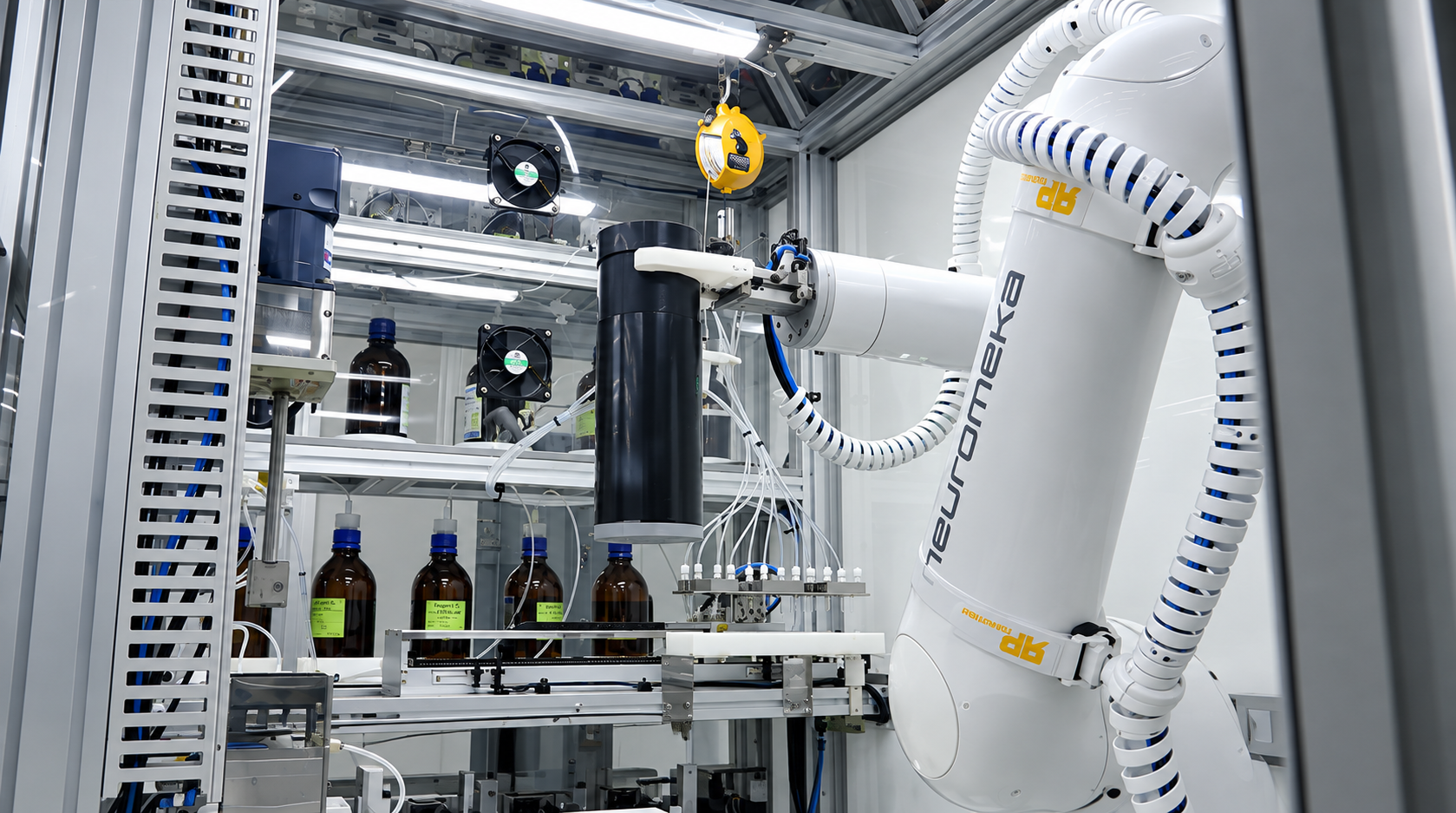
The gripper lifts a reverse light lens for transfer to the electrostatic removal and preheating stations.
Deployed Robot Solution
Neuromeka deployed an Indy7 collaborative robot with a custom gripper to automate the lens preparation and supply process.
The Indy7 performs the following sequence:
Pick Up Lens. The robot picks a reverse light lens from a tray or feeder.
ESD Treatment. The robot moves the lens to a dedicated ESD air-blowing station, where static charge is removed from the part.
Preheating. After ESD treatment, the robot transfers the lens to a preheating station. The robot maintains consistent positioning and dwell time to ensure each part reaches the required temperature.
Transfer to Injection-Molding Supply Position. Once preheating is complete, the Indy7 places the prepared lens into a designated handoff position.
Automated Loading. A separate take-out robot retrieves the prepared lens from the handoff position and loads it into the second-stage injection molding machine.
This allows the Indy7 to continuously prepare and supply lenses while the take-out robot handles the final transfer into the molding machine.
The Indy7 picks reverse light lenses from a tray for sequential processing through electrostatic removal and preheating stations.
Results
Metric
Before Automation
After Automation
Labor Usage
1 operator per line per shift, across 2 shifts/day
Robot handles lens preparation and supply; operator oversees the system
ESD & Preheating
Manual handling and variable timing
Consistent robot-controlled positioning and timing
Process Consistency
Dependent on operator technique
Repeatable motion and process timing
Production Uptime
Interruptions possible during breaks and shift changes
Automated operation for up to 20 hours/day
Safety & Ergonomics
Repetitive handling near hot equipment
Reduced operator exposure to repetitive and hot-zone tasks
Cleanliness
Frequent manual handling
Reduced manual contact with optical components
The Indy7 automates the sequential supply of reverse light lenses through electrostatic discharge and preheating stations, for continuous operation of a two-stage injection molding system.
Automation Benefits
Consistent Part Preparation. The Indy7 performs the ESD treatment and preheating steps with consistent positioning and timing, helping reduce variation before second-stage injection molding.
Reduced Labor Requirements. Automation significantly reduced the amount of manual labor required for lens preparation and supply, allowing operators to focus on system monitoring and other higher-value tasks.
Increased Production Uptime. The automated process can operate for approximately 20 hours per day, reducing interruptions caused by operator breaks, shift changes, or absenteeism.
Improved Safety and Ergonomics. Automating repetitive material handling reduces operator exposure to hot equipment and minimizes repetitive motions.
Cleaner Handling of Optical Components. Reducing manual contact helps maintain cleaner handling conditions for the reverse light lenses, which is particularly important for optical components where dust and surface contamination can affect final quality.
Scalable Automation Platform. The robot-based process can be adapted to other automotive lighting applications and production lines that use similar multi-stage injection molding workflows.
Share your process requirements, constraints, payload, cycle time, and floor layout. Our team will help you evaluate the right automation solution for your application.