Case Study 5

Progressive Press Automation

Manual press loading created injury risks at pinch points, operator fatigue from repetitive strain, inconsistent cycle times, and difficulty maintaining staffing levels.

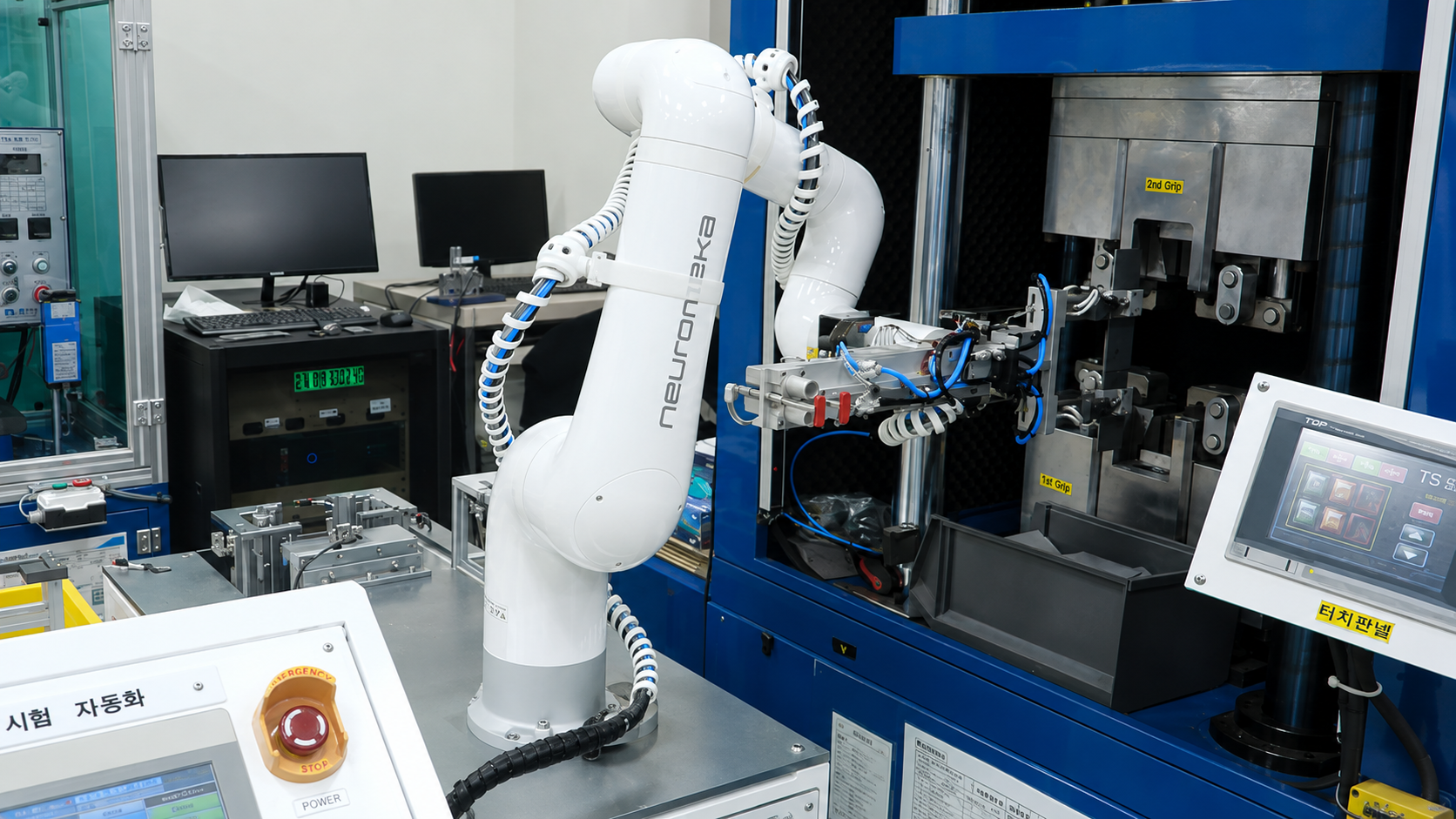
Three cobots tend the progressive press line, transferring stamped components between each operation while a single operator loads raw parts onto the conveyor
Three cobots tend the progressive press line, transferring stamped components between each operation while a single operator loads raw parts onto the conveyor.

Background

Previously, the customer relied on manual labor to load and unload metal parts at each press station. Operators moved between machines, placing raw blanks into the press, waiting for the cycle to complete, and retrieving finished parts. This introduced safety risks, fatigue, and inconsistent cycle times.

Customer Pain Points

  • Manual press loading created high risk of injury, especially near pinch points.
  • Repetitive strain caused operator fatigue and long-term health risks.
  • Cycle-time variation created inconsistent throughput due to operator pace.
  • Labor constraints made it difficult to maintain staffing for these tasks.

Automation Application Overview

The production line forms stamped metal components through three progressive press operations. A cobot is assigned to each press, and a single operator handles the loading of raw parts onto the conveyor. The cobots handle tending the presses and passing parts along the line.

Key Features

  • Cycle-based sequence synchronized with the press.
  • Custom end-effector adapted for part shapes.
  • Compact footprint for deployment in existing lines.
  • Safe robot-press handoff zone to prevent collisions.

Operation Flow

  • Operator places raw blanks on in-feed conveyor tray.
  • Sensor 1 detects part and triggers Robot 1.
  • Robot 1 loads blank into Hanoul Press, waits, then unloads finished part back to conveyor.
  • Part travels; Sensor 2 triggers Robot 2.
  • Robot 2 loads part into Simpac Press, waits, and unloads back to conveyor.
  • Part travels; Sensor 3 triggers Robot 3.
  • Robot 3 loads part into Kukil Press, waits, and unloads finished component.
  • Operator performs final QC or packing as needed.

System Components

  • Robots: 3 x Indy7 cobots, one per press.
  • Conveyor: powered belt linking all presses with inductive sensors at each pick-up zone.
  • End-effectors: custom parallel grippers with rubberized fingers for stable handling of oily blanks.
Indy7 progressive press tending in operation

Results

CategoryBefore AutomationAfter Automation
Labor3 operators moving parts between presses1 operator only loads blanks and oversees line
SafetyOperators working in press areaRobots handle all press interaction
ThroughputLimited by operator speedContinuous, synchronized cycles
Uptime16-20 hrs/day20 hrs/day with consistent output
ConsistencyVariable press-dwell timing and placementPrecise, repeatable part positioning and cycle start

Automation Benefits

  1. Labor efficiency: reduced from 3 operators to 1 supervisor, cutting labor costs by approximately 67%.
  2. Safety improvement: eliminated direct operator interaction with press danger zones.
  3. Increased throughput through synchronized robot cycles.
  4. Quality consistency through precise part placement and timing.

Contact Us

Share your process requirements, constraints, payload, cycle time, and floor layout. Our team will help you evaluate the right automation solution for your application.

Book a Meeting